
Blog

Tackling Contamination: The Evolution of Advanced Plastic Washing Systems

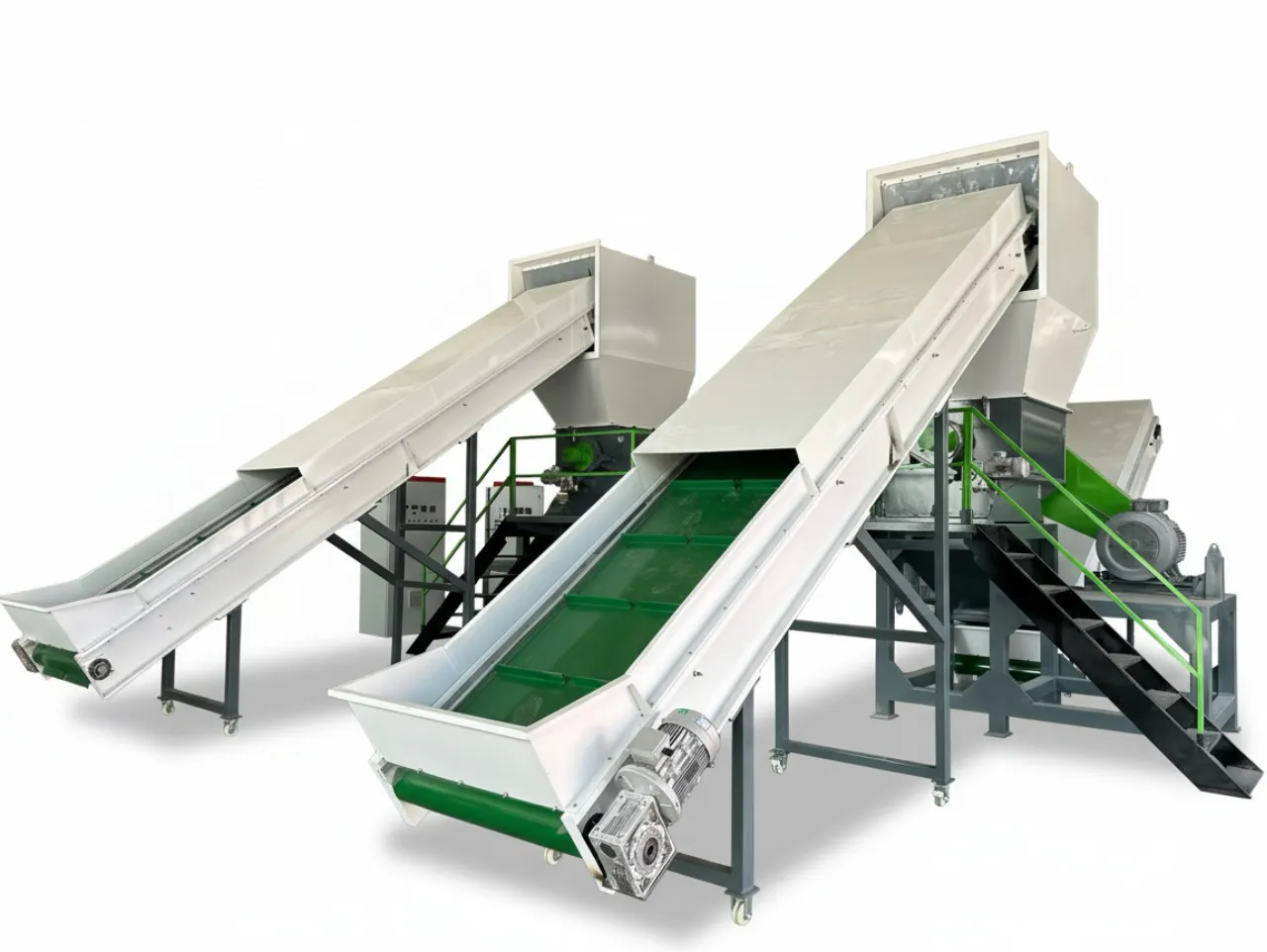
The image shows a large industrial setting that appears to be part of a plastic recycling washing system. These systems are integral to recycling operations where plastics need to be cleaned thoroughly to remove contaminants, residue, or labels before they can be processed further. In the photo, you can see multiple conveyor belts and sorting stations that systematically transport and separate different types of plastics. The belts likely lead to washing units where the plastic is cleaned, often using a combination of mechanical and chemical processes. The color-coded conveyor belts might be for sorting plastics by type or color, which is important for recycling as different types of plastics have different processing requirements and market values.
The advent of plastic has undeniably made our lives more convenient, yet its environmental repercussions are increasingly concerning. While traditional recycling efforts have progressed, the challenge of recycling certain plastics...

Making Recycling More Cost-Effective with AI: Insights from NIST Research

Workers at a recycling facility sort and separate recycled plasti
Recycling can be a significant expense for local governments, but AI might help cut those costs and potentially increase recycling rates. Researchers at NIST are working on making recycling more efficient and less expensive. Ev...

Unwrapping the Future of Recycling: The Plastic Film Squeezer’s Role in the Circular Economy

a part of a recycling line. Visible is a circular saw or cutting wheel covered with plastic debris, suggesting that it has been used to chop or grind plastic material. Such machinery is typically used to reduce the size of plastic waste to make it easier to process in later stages of recycling, like washing, pelletizing, or densification. The background includes more industrial equipment and a conveyor system, indicating this is part of a larger processing facility. Safety measures like guards and emergency stops seem to be in place, which are essential for operating heavy machinery.
The escalating crisis of plastic waste demands innovative solutions that not only recycle but also contribute to a circular economy. The “Plastic Film Squeezer” stands out as a beacon of progress in this domain, offeri...

Trend Analysis of the Global Plastic Recycling Machine Market

large bales of compressed plastic waste, which are typically prepared for recycling. These bales are formed after the sorting and cleaning processes, where different types of plastics are compressed into manageable blocks for easier transport and further processing. The variety of colors within each bale indicates a mix of different plastic items, which suggests that these bales may be destined for a facility that will further sort and recycle the material into new plastic products. This is a common practice in the recycling industry to reduce the volume of waste, making it more cost-effective to transport materials to recycling plants. Recycling facilities often use balers to compact the sorted recyclable materials into dense, tied bales. The bales conserve space during storage and transport, and their uniform shape makes them easier to handle and process
The global plastic recycling machine market is experiencing significant growth, driven by heightened awareness of environmental sustainability and the increasing demand for recycled plastics across various industries. With an anti...

Unlocking Business Efficiency with Plastic Recycling Machines: A Sustainable Approach

In today’s environmentally conscious market, businesses are increasingly turning to plastic recycling machines as a way to improve sustainability and profitability. This article delves into successful case studies across var...

AI Solutions to Drive the Growth of World Trade in Recyclables

AI solutions to drive the growth of world trade in recyclables
In an era where sustainability and environmental conservation have become paramount, the recycling industry is at the forefront of global efforts to reduce waste and promote the circular economy. Artificial intelligence (AI) is re...

The Philippines’ Plastic Predicament: A Crisis and Opportunity Unveiled

The Philippines' Plastic Predicament: A Crisis and Opportunity Unveiled
In a revealing study by Utility Bidder, a UK-based independent organization, the Philippines has been identified as the leading contributor to marine plastic waste globally, with an alarming 350,000 tons of plastic entering the oc...

Revolutionizing Recycling: The Impact of the Plastic Film Squeezer

In the quest for more efficient recycling methods, the Plastic Film Squeezer emerges as a game-changer, transforming the way we handle and recycle plastic films. This innovative technology is not just an advancement; it’s a...

Caglia Environmental Leads in Advanced PET Recycling with AI and Robotics

a man in a hard hat and reflective jacket stands in front of sort
In a significant leap towards enhancing polyethylene terephthalate (PET) recycling, Caglia Environmental, based in Fresno, California, has harnessed artificial intelligence and robotics technology. This initiative, supported by Th...

The Future of Plastic Recycling Machine Technology: Innovations and Price Considerations

a close-up view of a plastic granulator or shredder, focusing on the cutting chamber where the rotating blades are visible. These blades are instrumental in breaking down plastic into smaller pieces as part of the recycling process. The granulator's blades have plastic residue on them, suggesting that the machine has been actively used to process materials. The presence of rust and wear on the components indicates that the machine may be well-utilized or in need of maintenance to ensure optimal performance. The design of the rotor and the positioning of the blades are crucial for the efficiency and effectiveness of the granulation process. Proper maintenance, including regular cleaning and sharpening of the blades, is essential to keep the machine running smoothly and to prevent contamination of the recycled material.
The plastic recycling industry is witnessing a transformative era with the advent of advanced technologies that promise to revolutionize waste management and recycling processes. As the global community becomes increasingly aware...

Advances in PET Bottle Recycling Technologies

show the interior of a recycling facility, where workers are sorting through materials on a conveyor belt. This is likely a part of the initial sorting stage in a recycling process where workers separate different types of recyclable materials by hand. The facility seems to focus on the recycling of PET bottles, which are commonly used for beverages and other consumer products. The conveyor belt system is designed to move materials through the facility so that they can be sorted, cleaned, shredded, and eventually recycled into new products. The large bags and containers visible in the image suggest a collection of sorted materials ready for the next step in the recycling process. Manual sorting is a critical step in the recycling process as it ensures the purity of the materials being recycled, which is essential for high-quality recycling outcomes. The presence of workers in protective clothing, such as gloves and hats, indicates the emphasis on safety within the facility.
The quest for sustainable solutions in the plastic recycling industry has led to significant advancements in PET bottle recycling technologies. With the increasing demand for eco-friendly practices, the development of advanced &#8...

Lagos Leads in Environmental Protection: A Ban on Single-Use Plastics

Embracing Sustainable Waste Management The ban on single-use plastics and Styrofoam in Lagos is not just an environmental statement; it’s a call to action for innovative waste management solutions. As manufacturers of state-...

Cabinet Transforming Healthcare: Eco-Friendly Prescription Bottles Aim to Reduce Waste

With an astonishing 194 billion prescription bottles produced yearly, most of which are discarded, Cabinet is pioneering a sustainable solution to this environmental challenge....

Current State of Plastic Recycling in Canada

Current State of Plastic Recycling in Canada
Introduction Canada’s Evolving Plastic Waste Management Canada’s journey towards enhanced plastic waste management is marked by a steady shift to sustainable practices. Presently, the country recycles a modest percenta...

Revolutionizing Soft Plastics Recycling: Launch sustainable solutions

Revolutionizing Soft Plastics Recycling: Launch sustainable solutions
Rebooting Soft Plastics Collection and Recycling The launch of Close the Loop’s TonerPlas line marks a significant milestone in the revival of soft plastics recycling in Australia, particularly following the REDcycle program...

Transforming Plastic Waste into Wealth: Australia’s Billion-Dollar Opportunity

Australia is poised at a pivotal juncture in its fight against plastic pollution. A recent proposal, drawing inspiration from the European Union’s approach, suggests the implementation of a tax on plastic packaging. This bol...

Global Recycled Plastic Market: Projected Growth to $67.1 Billion by 2030

The global recycled plastic market is poised for an impressive growth trajectory, with projections estimating its value to soar to USD 67.1 billion by 2030, up from USD 46.5 billion in 2022. This remarkable growth, calculated at a...

Trommel Screen

A large, green industrial trommel screen with yellow safety railings, featuring a long, elevated rotating drum and conveyor belts for material sorting and separation.
Trommel Screen (Rotary Drum Screening Machine) A trommel screen (also called a rotary drum screen) separates materials by size using a rotating perforated drum. It’s a proven front-end sizing step for MSW sorting, re...

Belt Conveyor: The Backbone of Material Handling Systems

Belt conveyor
Introduction A Belt Conveyor is a ubiquitous piece of mechanical handling equipment used to transport materials from one location to another. It is especially prevalent in industries where bulk materials need to be moved quickly a...

How Recycling Balers Can Help Your Business

The image presents a vertical baler, an industrial machine used to compress and compact large volumes of loose materials, such as cardboard, plastic, paper, or textiles, into dense, manageable bales. Key Features and Functionality: Vertical Design: Unlike horizontal balers, this machine operates vertically, with materials being loaded from the top and the compacted bale ejected from the bottom or side. Loading Door: The open green door reveals the loading chamber where loose materials are fed into the baler. Compaction Mechanism: Inside the chamber, a hydraulic ram or press compresses the materials downwards, progressively forming a dense bale. Bale Chamber: The compacted materials are contained within the bale chamber, which is often lined with straps or wires to hold the bale together. Control Panel: The control panel allows operators to adjust settings such as bale size, density, and the baling process. Ejection System: Once a bale is fully formed, it is ejected from the machine, typically through a door or chute at the bottom or side. Applications and Benefits: Recycling and Waste Management: Vertical balers are commonly employed in recycling facilities, retail stores, and other businesses to manage and compact recyclable materials like cardboard, plastic, and paper. Space Optimization: Their vertical design makes them suitable for locations with limited floor space. Reduced Waste Volume: Baling significantly reduces the volume of waste materials, optimizing storage space, and lowering transportation costs. Improved Efficiency: Baling streamlines waste handling processes, making operations more efficient and contributing to increased recycling rates. Revenue Generation: Bales of recyclable materials can be sold to recycling companies, generating additional revenue. Comparison to Horizontal Balers: Footprint: Vertical balers typically have a smaller footprint compared to horizontal balers, making them ideal for locations with space constraints. Bale Size: They often produce smaller bales than horizontal balers, which can be advantageous for handling and transportation. Loading: Loading materials into a vertical baler usually requires less manual effort as gravity assists in the process. Overall, the vertical baler is a versatile and efficient tool for compacting recyclable materials, promoting sustainable waste management, and improving operational efficiency in various industries.
Recycling balers are an essential piece of equipment for any business that generates waste materials. These machines compress waste into compact bales, which can then be easily transported and recycled. Recycling balers offer a nu...

Transforming Plastic Recycling: Innovations and Challenges in a Sustainable Future

Transforming Plastic Recycling: Innovations and Challenges in a Sustainable Future
Harnessing the Potential of PET and HDPE – In the evolving world of plastic recycling, not all materials are created equal. Two frontrunners, Polyethylene Terephthalate (PET) and High Density Polyethylene (HDPE), emerge as t...

Revolutionizing Plastic Recycling: Las Vegas Welcomes a $75 Million Advanced Facility

Revolutionizing Plastic Recycling: Las Vegas Welcomes a $75 Million Advanced Facility-07
In an unprecedented environmental stride, Las Vegas now hosts a pioneering $75 million Polymer Center, thanks to Republic Services’ investment. Situated near Nellis Boulevard and Carey Avenue, this facility marks a major lea...

Small Crusher Machine: Compact and Efficient Crushing Solutions

An industrial small granulator for plastic recycling, featuring a large white hopper and an open collection bin for the washed granules.
Compact & Efficient Industrial Plastic Crusher: The RTM-SG 620 Introducing the RTM-SG 620: a compact yet robust industrial crusher that delivers powerful performance in a space-saving design. Perfect for works...

Magnetic Separator: A Critical Tool in Material Recovery

A side profile of an industrial magnetic separator machine, shown in light green, featuring a long feed conveyor, an overhead suspended magnetic drum, and a separate output conveyor.
Introduction A Magnetic Separator is a device used in various industries, especially in recycling and mining, to remove magnetic materials from a flow of non-magnetic substances. This tool plays a pivotal role in the purification...