


Screw Press Dewatering System for PE/PP Film Washing Lines
Our screw press dewatering system is engineered to extract water mechanically from wet plastic film, woven bags, and light scrap after washing. It delivers strong moisture reduction to below 15% with significantly lower energy use than thermal dryers.
- Mechanically reduces film moisture down to < 15%.
- Slashes reliance on electric heating and thermal drying load.
- Designed specifically for washed PE/PP films and woven raffia bags.
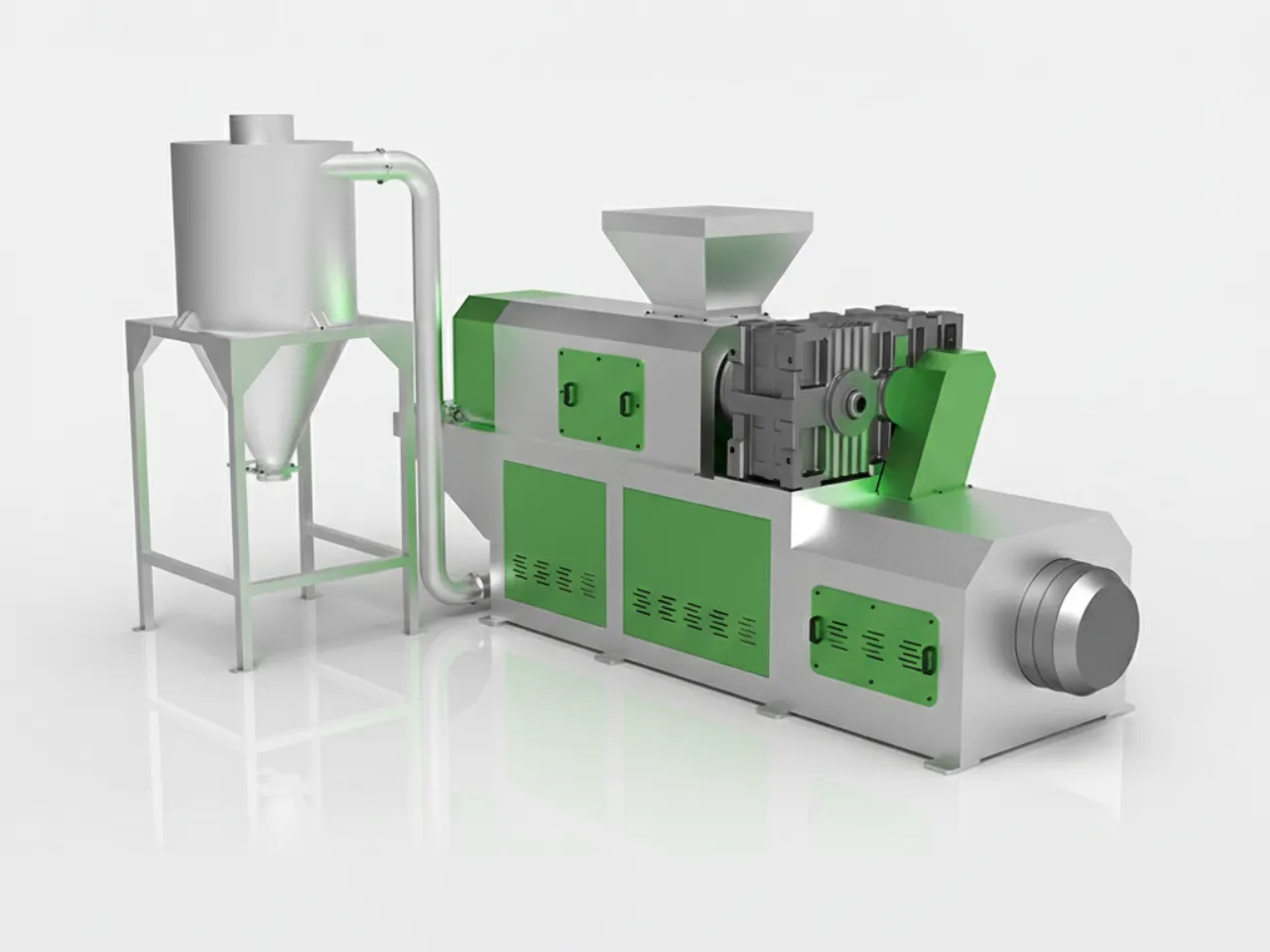
What Is a Screw Press Dewatering System?
A screw press dewatering machine uses a high-torque rotating screw shaft to compress wet material inside a perforated barrel, squeezing out free water continuously.
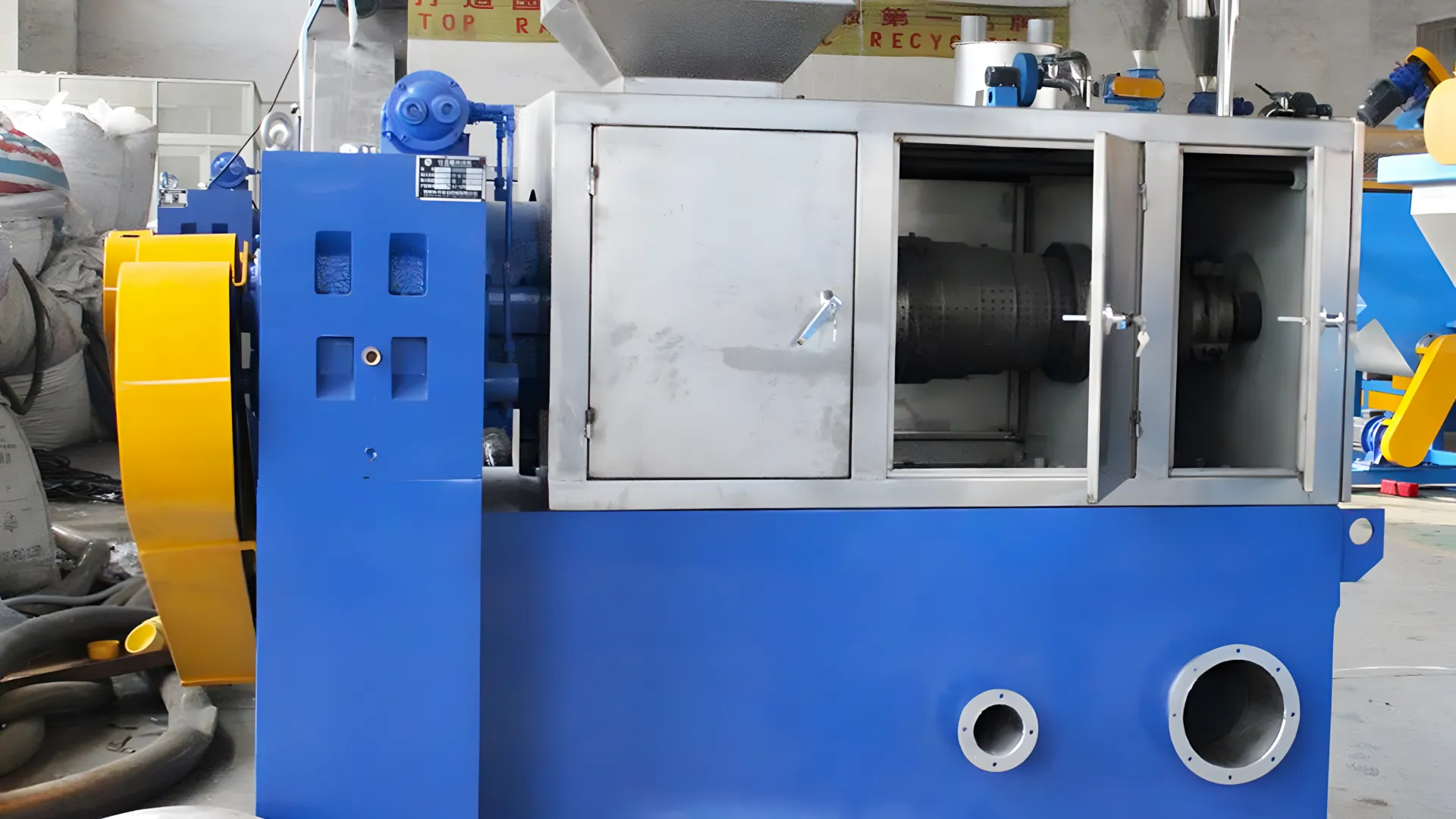
Continuous High-Pressure Dewatering
As pressure increases along the press shaft, free surface water is forced out through the screen and drained away, while dewatered material discharges continuously at the end of the barrel.
- Operates at low shaft speed with continuous mechanical pressure
- Low noise and vibration compared to high-speed spin dryers
- Effectively compacts fluffy film into a dense, handleable mass
- Reduces downstream thermal drying energy requirements by up to 50%
Key Benefits of Our Industrial Screw Press Dewatering Machine
-
Effective Moisture Extraction
Continuously removes surface water from washed film to stabilize downstream drying and pelletizing quality.
-
Lower Operating Cost
Mechanical dewatering consumes substantially less electricity than thermal drying heaters.
-
Robust Construction
Heavy-duty alloy screw flighting and reinforced drainage barrel resist wear from abrasive grit.
-
Flexible Adjustment
Adjustable back-pressure cone optimizes the balance between throughput and final dryness.
Applications
Engineered for wet and compressible materials in plastic recycling lines and process industries.
-
Plastic Recycling Lines
PE/PP film washing lines, woven bag & raffia washing lines, rinsing, and primary drainage stages.
-
Paper & Pulp Mills
Pulp dewatering, cellulose fiber extraction, and wet waste volume reduction.
-
Food & Beverage Processing
Fruit pomace, spent grains, vegetable waste, and organic sludge moisture reduction.
-
Sewage & Sludge Dewatering
Wastewater treatment sludge dewatering before transport or disposal.
Working Principle
A screw shaft with progressively increasing diameter compresses wet material inside a perforated drainage barrel.
-
Step 1Continuous Feeding
Wet material enters the feed hopper from the washing line via conveyor or screw feeder.
-
Step 2Progressive Compression
As the screw flight volume narrows, pressure forces free water out through the perforated barrel walls.
-
Step 3Back-Pressure Regulation
An adjustable discharge cone maintains optimal back-pressure to maximize moisture reduction.
-
Step 4Dry Flake Discharge
Dewatered material discharges at < 15% moisture into downstream drying or granulation stages.
Typical Technical Specifications
Final specifications depend on your material, capacity, and target moisture. Ask for a configured quotation.
| Parameter | Typical Range | Notes |
|---|---|---|
| Application | Plastic film (PE/PP), light plastics, wet streams | Best for materials carrying surface water after washing |
| Machine length | 4–6 m | Custom lengths available |
| Discharge moisture | < 15% (typical) | Depends on material, feed, and line layout |
| Screen / barrel | Perforated drainage barrel | Hole size and open area selected per material |
| Drive & gearbox | Heavy-duty reducer with inverter support | Low speed, high torque |
How to Integrate in a Washing Line
A screw press is typically placed after rinsing and before final drying or pelletizing to eliminate free water mechanically.
Key Integration Considerations
- Feed regulation: Use a controlled-speed conveyor or buffer bin to prevent surging.
- Filtrate collection: Ensure clean drainage piping back to water recycling or treatment systems.
- Downstream handoff: Discharge directly into an air-conveying blower, thermal dryer, or belt conveyor.
- Footprint planning: Allow space for screw removal and routine screen maintenance.
Frequently Asked Questions
Clear answers about screw press dewatering, moisture reduction rates, wear parts, and washing line integration.
Yes. Screw pressing is widely used for PE/PP film streams after washing, especially when you need strong mechanical water removal before drying or pelletizing.
Material type, feed consistency, contamination, screen selection, screw speed, and discharge back-pressure all impact final moisture. Proper sizing to your throughput is critical.
Screw presses are broadly used in sewage treatment and sludge dewatering. For those applications, the configuration may differ from plastic film designs—share your material details for the right recommendation.
Inquire About a Screw Press Dewatering System
Tell us your material type, target capacity, and line layout. Our team will recommend the right screw press configuration and provide an itemized quote.
