


Terakhir diperbarui: 28 April 2026 | Ditinjau oleh tim teknis Rumtoo
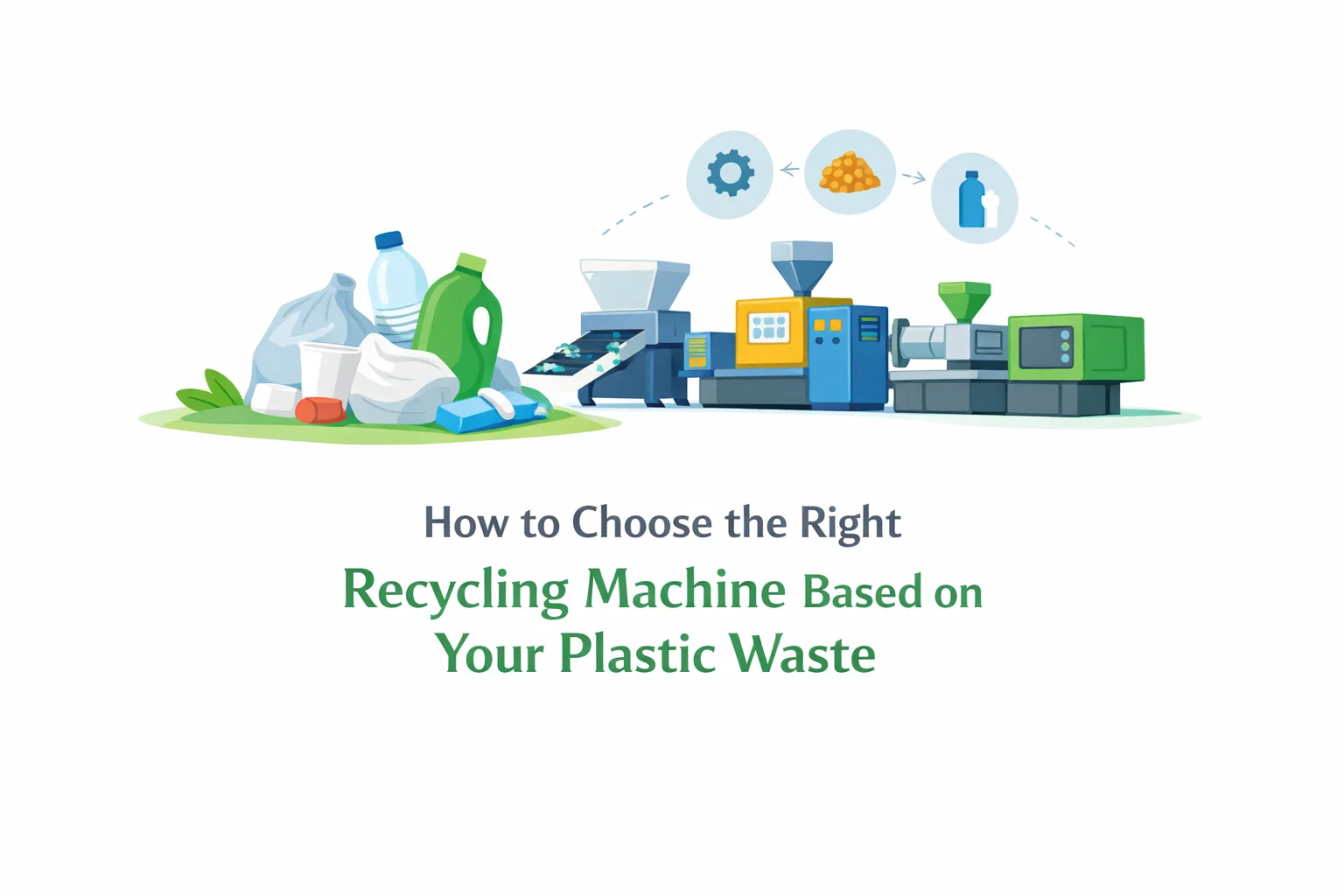
Mesin daur ulang plastik seleksi dimulai dengan satu pertanyaan praktis: limbah apa yang perlu Anda olah setiap hari? Mesin yang bekerja baik untuk scrap injeksi PP bersih dapat gagal pada film pascakonsumsi basah, dan lini pencucian botol PET tidak akan memecahkan masalah yang sama dengan ekstruder pelletizing. Panduan ini membantu pembeli mencocokkan jenis resin, tingkat kontaminasi, kapasitas, kualitas output, tata letak pabrik, dan ruang lingkup pemasok sebelum meminta penawaran.
Jika Anda ingin membandingkan kategori peralatan saat membaca, simpan panduan kami kategori mesin daur ulang halaman terbuka. Ini menunjukkan sistem utama yang digunakan dalam daur ulang plastik industri, termasuk pencacah, penghancur, lini pencucian, unit pengeringan, dan peralatan pelletizing.
Jawaban Cepat: Mesin Daur Ulang Plastik Mana yang Anda Butuhkan?
Peralatan yang tepat tergantung pada bentuk limbah, resin, tingkat kotoran, dan output target. Scrap pabrik bersih sering membutuhkan reduksi ukuran dan pelletizing. Material pascakonsumsi yang kotor, seperti botol atau film, biasanya membutuhkan penyortiran, pencucian, pemisahan, pengeringan, dan kemudian ekstrusi jika targetnya adalah pelet.
| Aliran limbah | Rute mesin umum | Output tipikal | Risiko utama untuk dicek |
|---|---|---|---|
| Scrap injeksi PP/PE bersih | Crusher atau mesin pencacah + lini peletisasi | Pelet untuk penggunaan ulang | Kontaminasi logam dan variasi aliran leleh |
| Botol PET pasca-konsumsi | Pembuka bale + penghilang label + penghancur + pencucian + pemisahan + pengeringan | Flake PET bersih, kadang pelet | PVC, label, lem, kelembapan, campuran warna |
| Film dan tas LDPE/LLDPE | Pencacah atau penghancur + pencucian gesek + pemeras/pengering + pelletizer cutter-compactor | Flake atau pelet kering | Air, pasir, tinta, pengumpanan tidak konsisten |
| Krat, drum, tutup HDPE/PP kaku | Pencacah atau granulator + pencucian + pemisahan sink-float + pengeringan + pelletizing | Flake atau pelet bersih | Polimer campuran, label, kotoran berat |
| Pipa, gumpalan, purging, part tebal | Pencacah poros tunggal + penghancur bila diperlukan + ekstrusi dengan filtrasi | Regrind atau pelet | Ukuran umpan besar, beban motor, keausan pisau |
Yang Sering Dilewatkan Panduan Pembeli
Banyak panduan pembeli menjawab beberapa pertanyaan berguna sekaligus: jenis mesin, konfigurasi lini, kisaran harga, kapasitas pabrik, material yang ditangani, dan cara memilih pemasok. Halaman peralatan yang kuat juga mengelompokkan sistem ke dalam bagian yang jelas seperti pencacahan, pencucian, pemisahan, pengeringan, pelletizing, dan daur ulang skala kecil.
Kesenjangan konten umum adalah kualifikasi praktis. Banyak halaman mencantumkan peralatan, tetapi lebih sedikit yang menjelaskan cara menghubungkan pilihan mesin ke audit limbah nyata, target kelembapan, sumber kontaminasi, batas utilitas, persyaratan keselamatan, dan spesifikasi pembeli output. Artikel ini mengisi kesenjangan itu dengan daftar periksa yang dapat Anda kirim ke pemasok peralatan.
1) Identifikasi Polimer Sebelum Memilih Mesin
Sistem daur ulang harus mencocokkan polimer terlebih dahulu. PET, HDPE, LDPE, LLDPE, PP, PS, ABS, PVC, PA, dan PC berperilaku berbeda selama penghancuran, pencucian, pengeringan, peleburan, filtrasi, dan pemotongan pelet. Satu aliran polimer bersih memberi Anda rute proses paling sederhana. Aliran campuran membutuhkan penyortiran atau target output bernilai lebih rendah.
- Botol PET: fokus pada de-labeling, penghilangan PVC, pencucian panas, kinerja pengeringan tinggi, dan kemurnian flake.
- HDPE dan PP plastik kaku fokus pada pengurangan ukuran, pemisahan sink-float, pencucian friksi, pengeringan, dan peletisasi yang stabil.
- Film PE: fokus pada pengumpanan, pemerasan atau pengeringan, degassing, dan filtrasi karena film membawa air, tinta, dan kotoran.
- Profil PVC atau pipa: jaga PVC jauh dari aliran PET dan poliolefin, dan pilih peralatan yang dibuat untuk umpan kaku yang abrasif.
EPA AS melaporkan bahwa plastik mencapai 35,7 juta ton timbulan sampah kota AS pada 2018, dengan wadah dan kemasan plastik lebih dari 14,5 juta ton. Skala itu penting karena pabrik daur ulang jarang menerima material sempurna; mereka menerima bahan baku campuran, kotor, dan bervariasi. Sumber: EPA Plastics: Data Spesifik Material.
2) Tentukan Output: Regrind, Flake Bersih, atau Pelet
Pilih rute proses berdasarkan produk yang Anda rencanakan untuk dijual atau digunakan ulang. Regrind, flake yang dicuci, dan pelet melayani pembeli yang berbeda. Jika Anda menentukan output terlambat, Anda mungkin membeli lini yang berjalan tetapi tidak dapat memenuhi target kualitas.
| Target keluaran | Peralatan yang biasanya dibutuhkan | Ketika masuk akal |
|---|---|---|
| Regrind yang telah dicacah atau dihancurkan | Mesin pencacah, crusher, granulator, pemisah logam | Scrap industri bersih atau material yang dijual ke pemroses lain |
| Flake tercuci | Pengurangan ukuran, pencuci friksi, tangki sink-float, pencucian panas jika diperlukan, pengering | Botol PET, botol HDPE, plastik rigid PP/PE, film setelah pencucian |
| Pelet | Umpan yang dicuci/dikeringkan, ekstruder, filter lelehan, degassing, pelletizer, pendinginan, silo | Produsen memerlukan umpan yang stabil untuk ekstrusi, injeksi, atau film blowing |
Untuk diskusi biaya yang lebih lengkap, lihat kami Panduan biaya peralatan 2026. Untuk output pelet, bandingkan opsi proses di lini peletisasi plastik kami halaman kami.
3) Cocokkan Bentuk Umpan dengan Sistem Pengumpanan
Umpan mengendalikan output nyata lini. Katalog mungkin menunjukkan 500 kg/h, tetapi film basah, karung tenun besar, gumpalan keras, atau pipa panjang dapat mengurangi throughput praktis jika desain intake tidak sesuai dengan bentuk umpan.
- Film, tas, raffia, dan kain nonwoven: gunakan cutter-compactor atau sistem pengumpanan paksa untuk mendensifikasi material sebelum ekstrusi.
- Flake kaku dan regrind: gunakan pengumpanan screw terkontrol atau dosing untuk mencegah surging di ekstruder.
- Gumpalan, purging, drum, dan bagian tebal: gunakan mesin pencacah single-shaft sebelum crusher atau ekstrusi.
- Botol PET: hilangkan label dan kecilkan ukuran botol sebelum pencucian, pemisahan, dan pengeringan.
Jangan memilih berdasarkan daya motor saja. Minta pemasok menunjukkan video pengumpanan dengan material yang mirip dengan milik Anda, bukan hanya flake pabrik yang bersih.
4) Periksa Kontaminasi Sebelum Menentukan Harga Lini
Kontaminasi menentukan apakah proyek membutuhkan tahap pra-perlakuan sederhana atau sistem pencucian lengkap. Scrap pasca-industri mungkin langsung ke penghancuran dan pelletizing. Limbah pascakonsumsi sering membawa kertas, label, pasir, sisa makanan, minyak, logam, kelembapan, dan polimer campuran.
- Kontaminasi ringan: pencucian dingin, pencucian friksi, dan pengeringan standar mungkin cukup.
- Minyak berat atau lem: tambahkan pencucian panas, dosing kimia, dan pembilasan yang lebih kuat.
- Pasir atau kaca: lindungi pisau, pompa, screw, dan filter lelehan dengan penghapusan dini.
- Material densitas campuran: gunakan pemisahan sink-float untuk menghilangkan plastik yang tidak kompatibel di mana densitas memungkinkan.
Label dan perekat dapat merusak kualitas akhir. Association of Plastic Recyclers mencatat bahwa perekat label, area cakupan, substrat, dekorasi, dan tinta semuanya memengaruhi daur ulang PET, dan perekat yang tidak terlepas dapat tetap menempel dan menjadi sumber kontaminasi. Sumber: Panduan Desain APR untuk Kemasan PET Kaku.
5) Tentukan Kapan Penyortiran Sebanding dengan Biayanya
Penyortiran sepadan dengan biayanya ketika resin campuran atau variasi warna mengurangi nilai jual flake atau pelet Anda. Meja sortir manual berbiaya lebih rendah mungkin cocok untuk aliran kecil yang bersih. Pabrik pascakonsumsi bervolume tinggi sering membutuhkan penyortiran optik sebelum atau sesudah pengurangan ukuran.
TOMRA melaporkan bahwa sistem penyortiran modern dapat mencapai kemurnian lebih dari 95% dalam pemulihan HDPE dan PP tanpa penyortiran manual dalam aplikasi yang tepat. Angka itu tidak berarti setiap pabrik membutuhkan sorter optik; itu berarti target kemurnian harus memandu anggaran penyortiran. Sumber: Aplikasi penyortiran plastik TOMRA.
6) Tentukan Kapasitas berdasarkan Jam Operasi Aktual
Ukur lini berdasarkan output per jam yang stabil, bukan puncak pengujian singkat. Tentukan tonase bulanan yang dibutuhkan, lalu kerjakan mundur melalui shift, perawatan terencana, penghentian pembersihan, penggantian pisau, penggantian filter, dan pergantian material.
| Item perencanaan | Pertanyaan untuk dijawab | Mengapa ini penting |
|---|---|---|
| Target kg/h | Output apa yang harus ditahan lini selama satu shift penuh? | Mencegah pembelian mesin yang hanya memenuhi output puncak secara singkat |
| Target kelembapan | Kelembapan berapa yang dapat diterima pelletizer atau pembeli Anda? | Menentukan kebutuhan dryer, squeezer, dan energi |
| Pergantian material | Seberapa sering resin atau warna berganti? | Mempengaruhi waktu pembersihan dan tingkat limbah |
| Ruang pabrik | Berapa panjang lantai, tinggi plafon, dan akses servis yang Anda miliki? | Mencegah keterlambatan instalasi |
| Utilitas | Daya, air, udara tekan, dan kapasitas air limbah apa yang tersedia? | Dapat mengubah desain pencucian dan pengeringan |
Sisakan ruang kapasitas untuk 12 hingga 24 bulan ke depan, tetapi hindari oversizing sejauh lini berjalan di bawah rentang operasi stabilnya. Lini yang berjalan stabil pada beban 75% hingga 85% sering berkinerja lebih baik daripada yang berjalan jauh di bawah kapasitas desain.
7) Bandingkan Jenis Mesin Berdasarkan Peran, Bukan Berdasarkan Nama
Pembeli sering mencari satu mesin, tetapi sistem industri biasanya adalah lini proses. Setiap mesin memiliki tugas: mengurangi ukuran, menghilangkan kotoran, memisahkan material, menghilangkan air, melelehkan plastik, menyaring kontaminasi, dan memotong pelet.
| Jenis mesin | Peran utama | Cocok | Waspadai |
|---|---|---|---|
| Mesin Pencacah | Pengurangan ukuran primer untuk material bulky atau keras | Gumpalan, drum, pipa, tas woven, bagian tebal | Desain rotor, akses pisau, torsi, safety guard |
| Crusher atau granulator | Pengurangan ukuran sekunder menjadi flake | Botol, part kaku, material tercuci | Ukuran saringan, operasi basah/kering, keausan pisau |
| Lini pencucian | Singkirkan kotoran, label, lem, dan material campuran | Botol PET, film PP/PE, HDPE/PP kaku | Pengolahan air, kebutuhan pencucian panas, kelembapan akhir |
| Dewatering dan pengeringan | Singkirkan air bebas dan kelembapan permukaan | Film dan flake tercuci | Target kelembapan, penggunaan energi, kontrol debu |
| Ekstruder dan pelletizer | Lelehkan, saring, degassing, dan potong pelet | Flake, film, regrind bersih | Filter type, venting, screw design, pellet shape |
Jika Anda membandingkan model mesin pencacah, milik kami panduan pembeli mesin pencacah industri menjelaskan perbedaan rotor, torsi, saringan, dan aplikasi secara lebih detail. Untuk proyek botol, lihat lini pencucian botol PET proses.
8) Buat RFQ yang Dapat Dihargai Pemasok Secara Akurat
Pemasok dapat memberi harga lini daur ulang Anda lebih akurat ketika permintaan Anda mencakup fakta material alih-alih frasa luas seperti “limbah plastik.” Kirimkan satu RFQ yang konsisten ke setiap pemasok agar Anda dapat membandingkan cakupan, bukan hanya harga utama.
- Daftar polimer dengan persentase estimasi, seperti 70% film LDPE dan 30% karung anyaman PP.
- Foto dan video limbah asli sebelum pengurutan, setelah pengurutan, dan setelah pencacahan yang ada.
- Catatan kontaminasi: pasir, kertas, label, minyak, residu makanan, logam, kelembapan, dan warna campuran.
- Target output: ukuran regrind, kelembapan flake cuci, ukuran pelet, warna, dan aplikasi akhir.
- Target kapasitas dalam kg/h dan ton bulanan, dengan jam operasi per shift dan shift per hari.
- Batas utilitas: tegangan, kuota daya, pasokan air, pengolahan air limbah, udara tekan, dan ruang lantai.
- Cakupan komersial: hanya mesin, lini penuh, instalasi, pelatihan, suku cadang, garansi, dan dukungan jarak jauh.
9) Minta Uji Coba Sebelum Membeli
Uji coba dengan material Anda dapat mengungkap masalah yang tidak dapat ditunjukkan brosur. Mintalah pemasok memproses sampel representatif dan melaporkan output stabil, beban motor, kelembapan setelah pengeringan, tekanan lelehan, frekuensi penggantian filter, tampilan pelet, dan waktu henti selama pengujian.
Untuk film, perhatikan konsistensi umpan dan degassing. Untuk botol PET, periksa pelepasan label, kontrol PVC, kualitas cucian, dan kelembapan akhir. Untuk HDPE atau PP kaku, periksa ukuran flake, pemisahan float-sink, penghilangan logam, dan filtrasi pelet. Simpan kondisi pengujian secara tertulis agar Anda dapat membandingkan pemasok dengan adil.
10) Periksa Keamanan, Kontrol, dan Akses Servis
Peralatan daur ulang industri mencakup pisau bergerak, nip point, permukaan panas, tegangan tinggi, sistem hidraulik, dan tugas perawatan berat. Desain keselamatan harus menjadi bagian dari keputusan pembelian, bukan tambahan belakangan.
- Tanyakan tentang pengaman tetap, interlock, berhenti darurat, titik lockout, dan akses penggantian pisau yang aman.
- Konfirmasikan standar kabinet listrik, opsi bahasa PLC, diagram pengkabelan, dan daftar suku cadang.
- Periksa apakah operator dapat membersihkan saringan, filter, tangki, dan pengering tanpa pengangkatan yang canggung atau jangkauan yang tidak aman.
- Minta manual, jadwal perawatan, dan materi pelatihan sebelum pengiriman.
OSHA memperingatkan bahwa mesin pemrosesan plastik membutuhkan pelindung untuk nip point, bagian bergerak, tegangan tinggi, dan paparan suhu tinggi, dan juga mengarahkan pemberi kerja ke lockout/tagout dan alat pelindung diri. Sumber: Guarding Mesin OSHA: Mesin Plastik. Asosiasi Industri Plastik juga mencantumkan standar keselamatan mesin ANSI/PLASTICS untuk peralatan seperti mesin ekstrusi. Sumber: Standar Keamanan Mesin Plastik.
Kesalahan Pemilihan Umum yang Harus Dihindari
- Memilih hanya berdasarkan harga: harga yang rendah dapat menyembunyikan konveyor, pengering, kontrol, suku cadang, instalasi, atau pengolahan air yang hilang.
- Melewatkan audit limbah: peralatan tidak dapat memperbaiki campuran resin yang tidak dikenal, kotoran, kelembapan, atau kandungan logam.
- Mengabaikan pembeli akhir: pelanggan pelet atau flake dapat menetapkan batasan untuk kelembapan, warna, abu, PVC, bau, aliran leleh, atau residu filtrasi.
- Membandingkan penawaran yang tidak lengkap: satu penawaran dapat mencakup instalasi, pisau cadangan, dan pelatihan sementara penawaran lain hanya mencakup mesin inti.
- Meremehkan biaya operasi: pisau, saringan, filter, air, daya, tenaga kerja, dan waktu henti semuanya memengaruhi payback.
FAQ tentang Pemilihan Mesin Daur Ulang Plastik
Apa itu mesin daur ulang plastik?
Mesin daur ulang plastik adalah peralatan industri yang mengubah limbah plastik menjadi regrind, flake bersih, atau pelet. Lini lengkap dapat mencakup penghancuran, penghancuran (crushing), pencucian, penyortiran, pengeringan, ekstrusi, filtrasi, degassing, dan pelletizing.
Mesin daur ulang plastik mana yang terbaik untuk limbah film?
Limbah film biasanya membutuhkan lini dengan umpan yang stabil, pencucian jika film kotor, pengeringan atau squeezing yang kuat, degassing, filtrasi, dan sistem pelletizing cutter-compactor. Film pertanian basah membutuhkan lebih banyak pencucian dan pengeringan daripada trim pabrik yang bersih.
Apakah saya selalu membutuhkan lini pencucian?
Tidak. Scrap pasca-industri yang bersih dan kering dapat berpindah dari penghancuran ke pelletizing. Botol pascakonsumsi yang kotor, film, kemasan kaku, dan limbah pengumpulan campuran biasanya membutuhkan pencucian dan pengeringan sebelum ekstrusi atau penjualan sebagai flake.
Kapasitas berapa yang harus saya pilih?
Pilih kapasitas dari output bulanan yang dibutuhkan dan jam operasi nyata. Sertakan perawatan, penggantian filter, penggantian pisau, pergantian material, dan penghentian pembersihan. Lini 500 kg/h yang stabil sering mengalahkan lini 700 kg/h yang hanya mencapai angka itu sesaat.
Informasi apa yang harus saya kirim ke supplier terlebih dahulu?
Kirimkan jenis resin, foto dan video limbah, tingkat kontaminasi, kondisi kelembapan, output target, kg/h yang dibutuhkan, ruang pabrik, catu daya, kondisi air, dan apakah Anda membutuhkan penawaran khusus mesin atau lini terpasang penuh.
Bagaimana cara membandingkan dua kutipan mesin daur ulang plastik?
Bandingkan cakupan proses, basis kapasitas, auxiliaries yang disertakan, merek motor, standar listrik, pengolahan air, instalasi, pelatihan, suku cadang, garansi, dan hasil uji coba. Jangan hanya membandingkan total harga beli.
Langkah Berikutnya: Sesuaikan Limbah Anda dengan Desain Lini
Sistem yang tepat adalah yang sesuai dengan bahan baku nyata Anda, pembeli output, batas pabrik, dan target payback. Mulailah dengan audit limbah, tentukan output, jalankan uji sampel, dan minta penawaran yang selaras dengan cakupan. Proses itu mengurangi pilihan peralatan yang salah dan memberi tim Anda jalur yang lebih jelas dari limbah plastik ke flake atau pelet yang dapat dijual.
Untuk beralih dari perencanaan ke pemilihan peralatan, tinjau mesin daur ulang yang tersedia atau kirim foto material, kapasitas target, dan persyaratan output Anda untuk rekomendasi teknis kepada Rumtoo.
