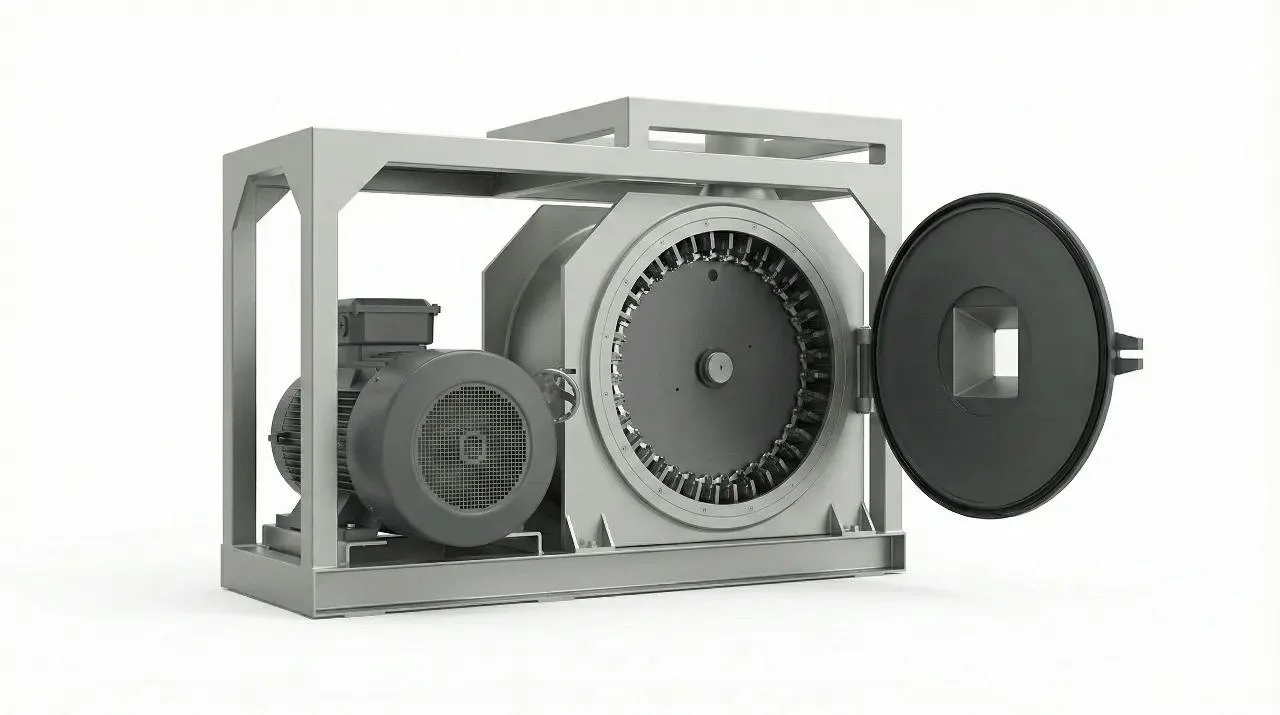

Fully Automatic PVC Pulverizer

Automatic Plastic Pulverizer for Fine Powder Production

Disc-type grinding system for converting plastic granules into controlled powder for recycling and compounding. Typical product size range is 20 to 100 mesh, depending on disc configuration and operating gap. Recommended feed is clean granules, with a maximum size of 14 mm.

Get a Custom Quote
Fully Automatic PVC Pulverizer in action

Feed and Discharge System

Metered infeed and stable discharge are primary drivers of output consistency. Typical layouts include vibratory dosing, guided chamber flow, and pneumatic transfer to separation and collection.

Efficient Feeding Mechanism

Material destined for pulverization is introduced smoothly onto a fixed, high-speed rotating pulverizer disc via a precisely controlled vibrating feeder, ensuring a consistent material flow.

Dynamic Centrifugal Force

An integrated inner disc leverages centrifugal force to expertly guide the material through the pulverizer disc, propelling it into an external chamber for efficient discharge.

Integrated Material Conveying

The pulverized material is further assisted by a downstream conveying system, ensuring seamless operation and preventing blockages.

Grinding Workflow

Process sequence from granule feed through disc milling to powder collection. Stable operating conditions are set by disc gap, disc tooth geometry, and temperature management.

1

Material Feeding

Granulated plastic (max 14mm) is fed into the pulverizer via a vibrating feeder.

2

High-Speed Pulverizing

A high-speed rotating disc grinds the material into a fine powder.

3

Centrifugal Discharge

Centrifugal force propels the powder into an external chamber for collection.

4

Conveying System

A downstream conveying system transports the final powder, preventing blockages.

Equipment Photos

Reference images for layout planning, access clearances, and component identification.

Model Specifications

Compare model sizing, installed motor power, and rated capacity ranges for preliminary selection.

ModelPower (Vibrating Feeder)Rotating Diameter (Main Motor)Fan PowerNumber of BladesVibration Screen DiameterProduction Capacity (kg/h)Equipment Weight (KG)
TM-5002.2KW500mm4KW12+24800mm150-2001500
TM-6004KW600mm5.5KW13+261000mm200-4502000
TM-8004KW800mm11KW15+321200mm500-8002800

System Configuration

A fine grinding installation is typically delivered as a system. Define upstream feed preparation, separation and collection, and optional size classification to match your target mesh and throughput.

ModuleFunctionWhen NeededNotes / Interfaces
Granule dosing (vibratory feeder)Stable mass flow into the millRecommended for consistent outputMatch feed rate to disc loading and target mesh
Metal separation (magnet)Protects discs and chamberRecommended when feed contamination risk existsInstall before dosing for best protection
Air conveying linePowder transport and heat removalTypical for powder transfer to separationAirflow is tied to fan power and duct routing
Cyclone dust separatorPrimary powder separationAvailable for dust removal and product collectionTypically paired with final filtration for fines capture
Dust collector (bag filter)Final fines captureTypically required for clean dischargeConfirm site dust handling and disposal method
Water cooling (optional)Removes process heat from the grinding zoneWhen heat-sensitive resins or fine mesh targets increase temperatureConfirm water supply or closed-loop cooling, and connection requirements on quotation
Screening / classification (optional)Narrower size distributionWhen tight oversize control is requiredCan be paired with return loop for oversize recycle
Oversize return loop (optional)Reprocesses oversize fractionWhen classification is installedImproves yield at tighter mesh targets
Sound enclosure (optional)Noise reductionWhen installed near operatorsConfirm access panels for maintenance

Throughput Performance

Throughput depends on model size, disc configuration, target mesh, and polymer behavior under shear. Use the specification table for shortlisting, then confirm capacity against your resin, feed temperature, and required powder fineness.

High Output Efficiency

Continuous-duty design supports steady production when feed rate, disc gap, and airflow are matched.

Material-Dependent Capacity

Hardness, brittleness, and impact behavior affect disc loading and the achievable kg/h at a given mesh.

Mesh Target Tradeoff

Finer powder targets generally reduce throughput and increase heat generation. Define acceptable size distribution before final sizing.

Thermal Management

Disc milling generates heat that can affect resin properties and powder flowability. Temperature control and internal cooling help stabilize the grinding zone and reduce thermal spikes during continuous operation.

Automatic Temperature Control

Stabilizes the grinding zone temperature to support repeatable operation across different resin batches.

Optional Water Cooling

Water cooling can be configured to remove process heat, reduce melt risk, and maintain stable powder discharge.

Process Stability

Stable temperature supports consistent gap setting behavior and helps reduce variability in size distribution.

Maintenance and Wear Parts

Uptime is driven by disc wear, access for adjustment, and cleaning time between resin changes. Evaluate wear-part intervals and service procedure against abrasiveness, contamination risk, and shift schedule.

Disc Wear Life

Disc design targets long service intervals to reduce resharpening frequency and planned downtime.

Adjustment and Replacement

Disc gap adjustment and disc replacement are designed to be performed quickly to restore output consistency.

Cleaning Access

Access design affects changeover time when switching polymers, colors, or additive packages.

Operating Cost Drivers

Cost per kilogram is driven by energy input, wear parts, and operator time. Confirm utilities, consumables, and maintenance intervals during quotation to estimate unit economics for your mesh target.

Energy per Kilogram

kWh/kg varies with resin type, fineness target, and airflow settings. Finer mesh targets typically increase energy input.

Wear Parts

Disc service interval and resharpening/replacement plan are primary consumable drivers for long-run operations.

Labor and Changeover

Feeding, monitoring, and cleaning time affect labor cost. Faster access can reduce changeover losses between runs.

System Comparison

Side-by-side view of output consistency, maintenance burden, and control approach for equipment evaluation.

FeatureConventional SystemsTemperature-Controlled Disc Mill
Output QualityInconsistent, high dustUniform, fine powder
Operating CostsHigh (energy, parts, labor)Low (energy-efficient, durable)
MaintenanceFrequent, complexMinimal, easy access
ControlManual, impreciseAutomatic temperature control

Polymer Compatibility

Input resin brittleness, hardness, and impact behavior affect achievable mesh and stable disc loading. Confirm resin type and feed condition before final model selection.

Suitable Resin Types

Medium-hard, brittle, or high-impact resins including PE, PVC, and PC granules.

Feed Form and Size

Granular feed is recommended. Maximum feed size is 14 mm for stable metering and disc loading.

Particle Size Control

Final size distribution is determined by disc tooth geometry, operating gap, and material response to shear. Define target mesh and allowable oversize when specifying the system.

Typical Size Range

20 to 100 mesh, depending on disc configuration and operating settings.

Optional Screening

Screening can be integrated when tighter control of oversize or a narrower cut is required.

Warranty and Service Terms

Warranty scope, exclusions, and service response are defined in the quotation and sales contract. Align coverage expectations with operating hours and maintenance plan.

Standard Warranty

Standard warranty term is 12 months.

Technical Support

Lifetime technical support is offered. On-site support and extended coverage depend on the selected service package.

Installation and Utilities

Define site utilities and layout constraints early to avoid capacity losses from poor duct routing, insufficient cooling, or restricted service access. Final requirements are confirmed on quotation.

RequirementWhat to ProvideWhy It MattersPractical Notes
Electrical powerStable supply for mill, feeder, and fan motorsSets achievable airflow and throughput stabilityConfirm voltage/frequency and total installed power from selected model
Water cooling (optional)Water supply or closed-loop cooling circuitControls process heat and supports stable powder productionConfirm connection size, flow, and temperature limits during sizing
Ducting and dust handlingRouting for conveying air, separation, and collectionAffects pressure loss, separation efficiency, and housekeepingMinimize sharp bends and long runs to reduce pressure drop
Floor space and accessService clearance around the mill and collectionDetermines maintenance time and safe handling of wear partsPlan access for disc adjustment, cleaning, and filter maintenance
Feed preparationClean, consistent granules within size limitsReduces wear and improves powder consistencyConsider screening and metal separation upstream when needed

Quote Request

Share resin type, target mesh, required capacity, and available utilities to confirm configuration and quotation.

Contact Form

We respect your privacy. Your information will only be used to discuss your project.

Author: Rumtoo Plastic Recycling Machine

Rumtoo Plastic Recycling Machine, the leading manufacturer of high quality PET Bottle、PP / PE Film Recycling Machinery. Our PE film washing lines offer reliability, efficiency and maximum durability in recycling dirty and soiled PET bottle、PE film back into plastic granulate. With more than two decades of service to the plastics recycling industry, Rumtoo is proud to be responsible for recycling thousands of tonnes of plastic films such as plastic bags, PP non-woven supersacks and LDPE film every month at hundreds of recycling facilities worldwide.